
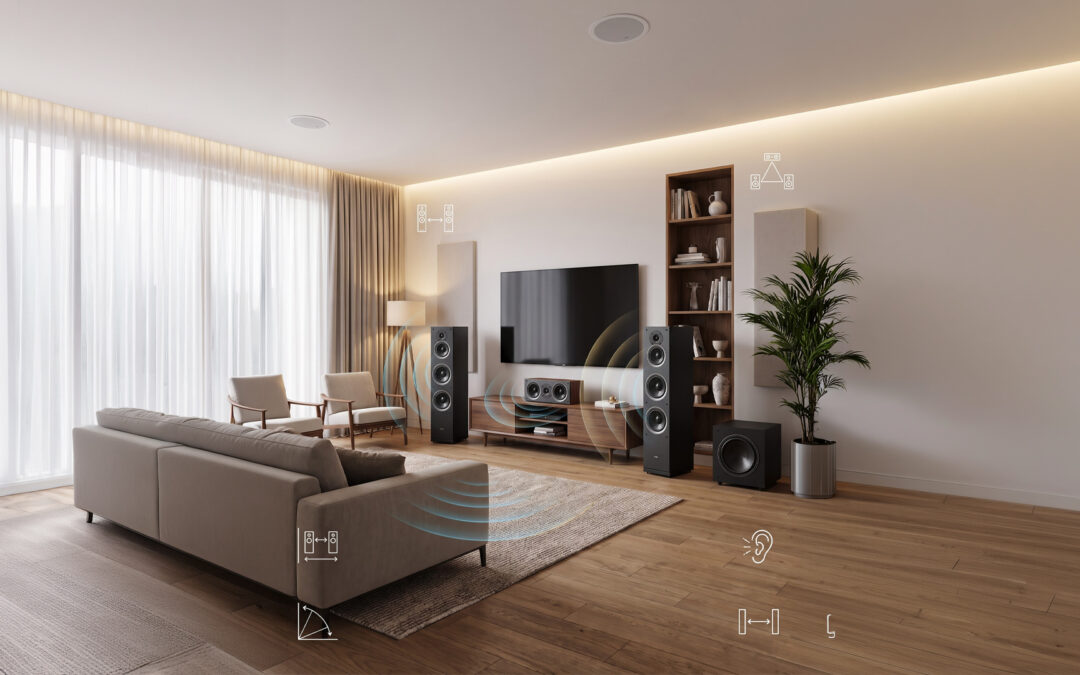
A proper Speaker Placement Guide can make a bigger difference to your audio experience than upgrading to more expensive speakers. Whether you're setting up floor-standing, bookshelf, in-wall, or in-ceiling speakers, correct positioning improves stereo imaging, bass response, clarity, and overall room acoustics. In this Speaker Placement Guide, you'll discover the 15 most common placement mistakes and how to fix them for exceptional Hi-Fi and home theater performance.
Why Speaker Placement Matters More Than Expensive Equipment
Imagine buying a luxury sports car and driving it on flat tires.
That's exactly what happens when premium speakers are placed incorrectly.
Proper speaker placement affects:
- Stereo imaging
- Vocal clarity
- Bass performance
- Soundstage width
- Surround immersion
- Listening comfort
Many audio enthusiasts spend thousands upgrading equipment while ignoring room acoustics and speaker positioning—the very factors that often make the biggest difference.
A properly positioned mid-range system can outperform an expensive setup with poor placement.
1. Placing Speakers Too Close to the Wall
One of the most common speaker placement mistakes is pushing speakers directly against a wall.
Why it's bad
Rear reflections boost certain bass frequencies, creating boomy, muddy sound.
How to fix it
Keep speakers:
- 20–60 cm (8–24 inches) from the rear wall
- Experiment gradually until bass sounds tight and balanced
For LiYA Floor-Standing Speakers, leaving adequate breathing room allows the drivers to produce deeper, cleaner bass while maintaining excellent imaging.
2. Ignoring the Listening Triangle
The listening triangle is one of the most important concepts in Hi-Fi speaker placement.
The distance between:
- Left speaker
- Right speaker
- Your listening position
should ideally form an equilateral triangle.
Example:
If speakers are 2.5 meters apart, your seating should also be roughly 2.5 meters away.
Benefits include:
- Precise imaging
- Balanced stereo effect
- Better center vocals
- Wider soundstage
3. Incorrect Toe-In Angle
Toe-in refers to angling speakers toward your listening position.
Too little toe-in
- Weak center image
- Less detail
- Diffused sound
Too much toe-in
- Narrow soundstage
- Harsh treble
- Reduced spaciousness
Best practice
Start with both speakers aimed just behind your head and adjust until vocals lock into the center.
4. Speakers at the Wrong Height
Tweeters should generally sit at ear level when you're seated.
Why?
High frequencies are directional.
If speakers are too low:
- Dialogue becomes dull
- Detail decreases
If speakers are too high:
- Imaging becomes unnatural
For bookshelf speakers, quality speaker stands often provide better performance than placing them directly on furniture.
5. Placing Speakers Inside Cabinets
Many homeowners place bookshelf speakers inside TV cabinets.
This blocks sound and creates unwanted reflections.
Instead:
- Place speakers outside furniture
- Keep front edges flush with shelves
- Allow airflow around cabinets
LiYA Bookshelf Speakers perform best on dedicated stands or sturdy shelves with adequate clearance.
6. Ignoring Room Reflections
Hard surfaces reflect sound.
Examples include:
- Glass
- Marble
- Tile
- Concrete
- Large windows
These reflections reduce clarity and stereo imaging.
Solutions include:
- Curtains
- Rugs
- Fabric sofas
- Acoustic panels
- Bookshelves
Improving room acoustics often provides a bigger improvement than upgrading equipment.
7. Carpet vs Tile Floors
Flooring plays a surprisingly large role in sound quality.
Tile floors
- More reflections
- Brighter sound
- Potential echo
Carpet
- Better absorption
- Reduced reflections
- Improved dialogue clarity
If your room has tile flooring, consider placing a large rug between the speakers and listening position.
8. Uneven Speaker Placement
Sometimes one speaker is beside a wall while the other sits in open space.
This creates:
- Uneven bass
- Off-center vocals
- Poor stereo balance
Try to maintain similar surroundings for both left and right speakers.
Symmetry matters.
9. Blocking Speakers with Furniture
Large sofas, cabinets, plants, or tables can obstruct sound waves.
Avoid placing:
- Coffee tables directly in front
- Decorative objects over speakers
- Tall furniture between speakers
Give speakers a clear path to the listening area.
10. Placing Surround Speakers Too Far Back
Surround speakers should wrap around your seating—not play from another room.
Ideal placement:
- Slightly behind seating
- 90–110 degrees relative to listeners
- Around 30–60 cm above ear level
This creates an immersive home theater experience without drawing attention to individual speakers.
11. Mounting In-Wall Speakers Incorrectly
In-wall speakers should create a seamless front soundstage.
Avoid:
- Uneven heights
- Random spacing
- Mounting too close to corners
Proper placement delivers cleaner imaging and a more integrated appearance.
LiYA In-Wall Speakers are ideal for dedicated home theaters where aesthetics and performance are equally important.
12. Installing In-Ceiling Speakers Everywhere
Ceiling speakers aren't intended to replace front stereo speakers in every setup.
They excel for:
- Whole-home audio
- Dolby Atmos overhead channels
- Distributed music systems
For home theater, use in-ceiling speakers as height channels while floor-standing or bookshelf speakers handle the front stage.
LiYA In-Ceiling Speakers provide immersive overhead effects when positioned according to Dolby Atmos guidelines.
13. Overloading the Room with Bass
More bass isn't always better.
Placing speakers in corners can exaggerate low frequencies, making music and movies sound bloated.
Instead:
- Move speakers away from corners
- Adjust subwoofer placement independently
- Experiment before changing EQ settings
14. Ignoring Room Size
Large speakers in tiny rooms can overwhelm the space.
Likewise, small speakers may struggle in large open-plan living areas.
Choose speakers that match your room dimensions:
- Small rooms: Bookshelf speakers
- Medium rooms: Floor-standing or bookshelf speakers with a subwoofer
- Large rooms: Floor-standing speakers with surround channels
- Minimalist interiors: In-wall speakers
- Whole-home audio: In-ceiling speakers
15. Never Testing Different Positions
The biggest mistake?
Setting up speakers once and never experimenting again.
Move speakers in small increments.
Even shifting them by 10–15 cm can noticeably improve:
- Bass
- Imaging
- Vocal clarity
- Stereo width
Patience often rewards you with dramatically better sound.
Recommended Speaker Layouts for Living Rooms
Stereo Music Setup
- Speakers 2–3 meters apart
- Equal distance to listener
- Tweeters at ear height
- Slight toe-in
- Away from walls
Ideal for music lovers and Hi-Fi enthusiasts.
5.1 Home Theater Setup
- Front left/right speakers beside the TV
- Center speaker below or above the display
- Surround speakers slightly behind seating
- Subwoofer positioned after testing different room locations
This layout delivers immersive surround sound with accurate dialogue and impactful bass.
Dolby Atmos Layout
Combine:
- Floor-standing front speakers
- Center channel
- Surround speakers
- In-ceiling height speakers
This configuration creates three-dimensional audio, making movies and games feel more lifelike.
Quick Speaker Placement Checklist
Before you finish setting up your system, make sure you can answer "Yes" to these questions:
- Are the speakers away from the rear wall?
- Are both speakers equally spaced?
- Is the listening triangle balanced?
- Are tweeters at ear level?
- Is toe-in adjusted correctly?
- Are speakers free from furniture obstructions?
- Have room reflections been minimized?
- Have you tested multiple positions?
If not, a few simple adjustments could unlock significantly better sound.
Why Choose LiYA Speakers?
Outstanding sound starts with thoughtful speaker design—and reaches its full potential through proper placement.
LiYA offers a complete range of premium audio solutions for every room and listening style:
- Floor-Standing Speakers for powerful stereo performance and cinematic impact.
- Bookshelf Speakers for compact spaces without sacrificing detail.
- In-Wall Speakers for clean, integrated home theater installations.
- In-Ceiling Speakers for immersive Dolby Atmos effects and whole-home audio.
Combined with proper speaker positioning and good room acoustics, LiYA speakers deliver the clarity, depth, and realism every home theater enthusiast deserves.
Frequently Asked Questions
What is the ideal distance between speakers?
For most home setups, place speakers 2–3 meters apart and form an equilateral triangle with your listening position.
Should speakers face straight ahead?
A slight toe-in toward the listening position usually provides the best stereo imaging and center focus.
How far should floor-standing speakers be from the wall?
Start with 20–60 cm of clearance from the rear wall and adjust to achieve balanced bass.
Do rugs improve speaker sound?
Yes. Rugs help reduce floor reflections, improving clarity and stereo imaging, especially in rooms with tile or hardwood flooring.
Are in-ceiling speakers good for stereo music?
They work well for background music and whole-home audio but are generally best used as height channels in a dedicated home theater.
Final Thoughts
The difference between average sound and exceptional sound often comes down to placement rather than price.
By avoiding these 15 common mistakes and applying proven speaker positioning techniques, you'll enjoy clearer vocals, tighter bass, a wider soundstage, and a more immersive listening experience.
Whether you're upgrading a Hi-Fi music room or designing a dedicated home theater, taking the time to optimize speaker placement is one of the highest-value improvements you can make.
And when paired with LiYA's range of floor-standing, bookshelf, in-wall, and in-ceiling speakers, you'll be well on your way to experiencing audio the way it was meant to be heard.